
How to Pack a Storage Container: Maximize Space and Protect Everything Inside
A well-packed container holds noticeably more and keeps everything in better shape. Here is the order, the stacking rules, and the humidity tricks professionals use.
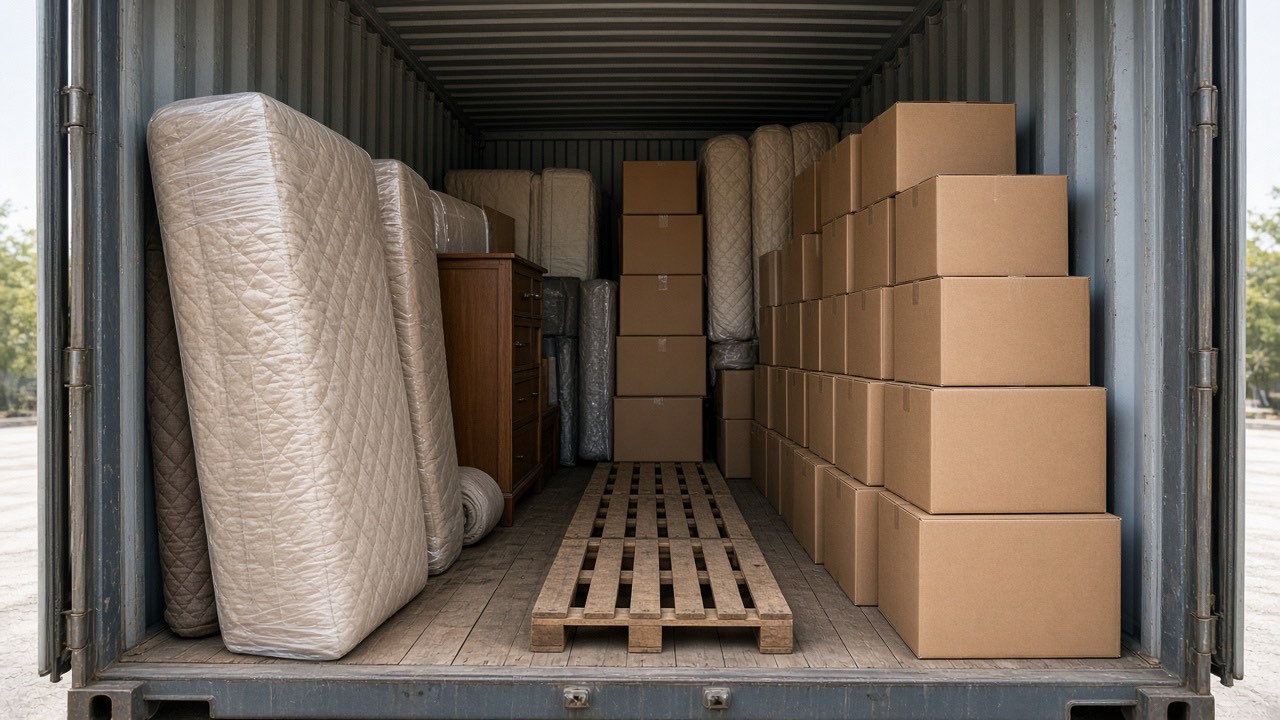
The short answer: lay down pallets, load the biggest and heaviest items against the back wall, stack uniform boxes heavy-to-light in tight tiers, keep a center aisle, and put the things you'll need most near the doors. In a humid climate, use plastic bins and breathable covers so moisture can't get trapped.
Before you pack: gather the right supplies
- Uniform boxes. Two or three sizes stack far better than a random mix.
- Plastic bins with lids for anything moisture-sensitive: papers, linens, clothing.
- Furniture pads or moving blankets and cotton sheets.
- Wooden pallets to raise everything a few inches off the floor.
- Moisture absorbers such as calcium chloride tubs.
- Tape, markers, stretch wrap for drawers (not for upholstery), and a tape measure.
Step 1: Make a map
An 8×20 ft container gives you roughly 160 square feet of floor. Sketch where large items will go before moving day. Decide what you'll need to reach (seasonal gear, tools, documents) and plan for it to go in last, near the doors.
Step 2: Floor and back wall
Lay pallets across the floor. Then load the largest, heaviest items against the back wall:
- Appliances (clean, dry, doors propped slightly open)
- Dressers and bookcases, standing upright
- Mattresses and box springs, on their sides in mattress bags
- Sofas, standing on end if the frame allows, to save floor space
Step 3: Build box walls
Stack boxes in tight tiers like bricks, heaviest at the bottom. Books and tools go in small boxes so they stay liftable; linens and lampshades go in large boxes on top. Don't stack above shoulder height unless the stack is very stable.
Step 4: Fill the gaps
Use dresser drawers, the inside of washers, and the space under tables for small, light items. Slide rugs, rolled and wrapped, along the side walls.
Step 5: Keep an aisle
A narrow center aisle lets you reach the back without unpacking everything. If you need regular access to both ends, a double door unit ($130/month) lets you open the container from the front and the back.
Protecting furniture
- Take legs off tables and bag the hardware, taped to the underside.
- Wrap wood furniture in pads or cotton sheets. Don't wrap wood or upholstery tightly in plastic; it traps condensation.
- Stack chairs seat-to-seat with a pad between them.
- Keep mirrors and framed art on edge, never flat, and mark them "fragile."
Beat Texas humidity
Gulf Coast air carries a lot of moisture. Make sure every item is completely dry before it goes in, leave a few inches between items and the walls so air can move, and place moisture absorbers in the corners. For heirlooms, electronics, and documents, consider an insulated unit ($100/month) or climate control unit ($195/month). We explain the difference in our climate-controlled vs. insulated guide.
Label for your future self
Number every box and keep a simple list on your phone: box number, room, contents. Snap a photo of the container interior when you're done. Months later you'll know exactly where the coffee maker is.
All E-Z Storage containers are built for high structural resistance and guaranteed hurricane-proof, with 24/7 access at our Hitchcock facility. Get a quote or call 713-702-8451.
Frequently asked questions
What should go in a storage container first?
Lay pallets on the floor first, then load the largest and heaviest items, such as appliances, dressers, and mattresses, against the back wall.
Should I wrap furniture in plastic for storage?
No. Plastic traps moisture against wood and fabric, which causes mold and warping in humid climates. Use furniture pads or breathable cotton sheets instead.
How do I prevent moisture in a storage container?
Make sure everything is dry before storing, raise items on pallets, leave gaps for airflow, use moisture absorbers, and choose plastic bins over cardboard for sensitive items.