
Climate-Controlled vs. Insulated Storage in Humid Texas: Which Do You Need?
Texas summers push container interiors well past 100°F with near-constant humidity. Here is what insulation alone handles, when you need true climate control, and how to choose.
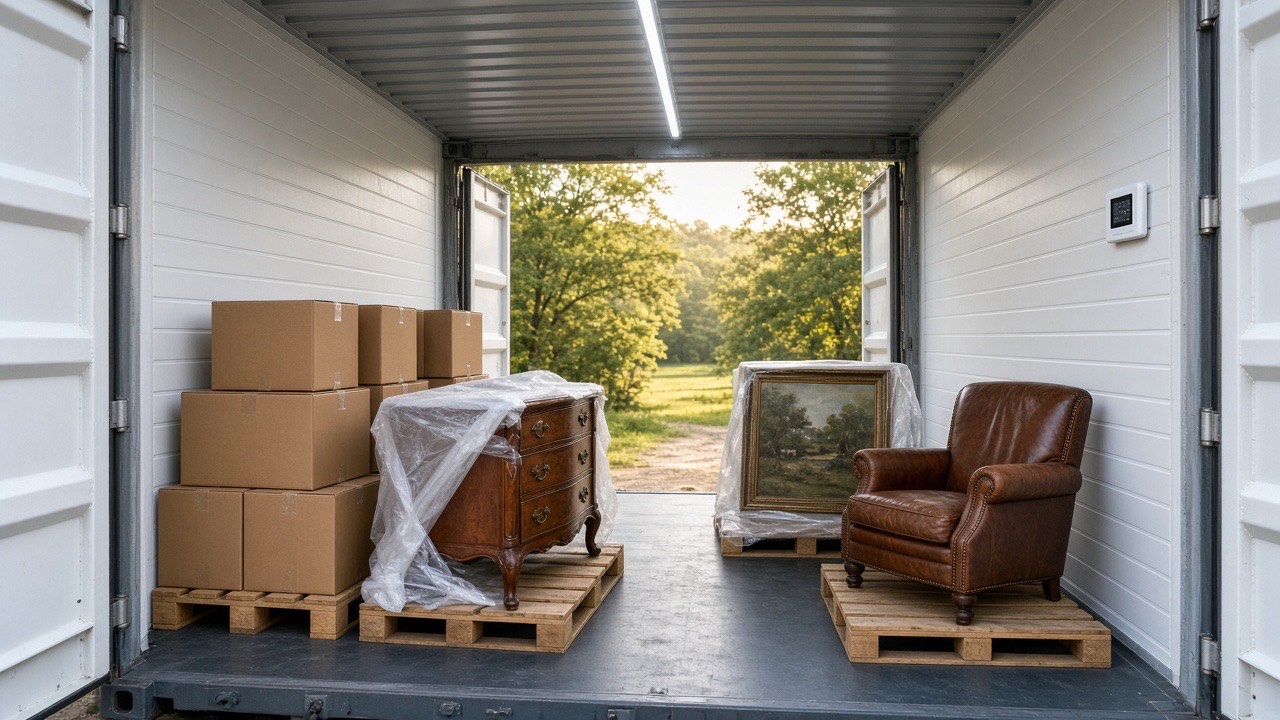
The short answer: choose a climate-controlled unit if you're storing anything that can warp, mold, crack, or corrode: wood furniture, leather, artwork, photos, documents, instruments, or electronics. Choose an insulated unit for everyday household goods, tools, and seasonal items that just need protection from extreme heat.
Why the Gulf Coast is hard on stored belongings
In Galveston County, summer afternoons regularly top 95°F with humidity that rarely lets up. Inside an uninsulated steel box, temperatures can climb far higher. But heat is only half the problem. When humid air cools overnight, moisture condenses on surfaces, and that cycle of damp and dry is what warps wood, lifts veneers, grows mildew on fabric, and corrodes circuit boards.
Insulated vs. climate-controlled: the difference
| Insulated unit | Climate control unit | |
|---|---|---|
| How it works | Insulated walls slow heat transfer | Actively regulates temperature and humidity |
| Heat protection | Good: cuts peak interior temperatures | Excellent: holds a set range year-round |
| Humidity protection | Limited | Excellent |
| Best for | Furniture you're not attached to, appliances, tools, holiday décor, sporting goods | Antiques, art, photos, documents, electronics, instruments, leather, mattresses |
| E-Z Storage price | $100/month | $195/month |
A simple rule of thumb
Ask yourself: "If this item spent a week in a humid garage in August, would it be ruined?" If yes, it belongs in climate control. If it would be fine, an insulated unit protects it at roughly half the cost. If it's tough enough for an unheated shed, a standard 8×20 ft container ($85/month) works.
Packing tips for humid climates
- Use plastic bins with lids instead of cardboard, which absorbs moisture.
- Keep furniture on pallets so air circulates underneath.
- Wrap upholstery in breathable cotton sheets, not plastic, which traps condensation.
- Make sure everything is completely dry before it goes into storage.
All E-Z Storage containers are built for high structural resistance and guaranteed hurricane-proof, so whatever you choose stays dry. Get a quote or call 713-702-8451.
Frequently asked questions
Is climate-controlled storage worth it in Texas?
For humidity-sensitive items such as wood furniture, electronics, photos, documents, and leather, yes. Gulf Coast humidity causes warping, mold, and corrosion that insulation alone can't prevent.
What is the difference between insulated and climate-controlled storage?
Insulated storage uses insulated walls to slow heat transfer and reduce temperature extremes. Climate-controlled storage actively regulates both temperature and humidity within a set range.