
Renovating Your Home? How Storage Keeps the Project on Time and Your Stuff Safe
Contractors move faster in empty rooms, and your furniture stays clear of dust and paint. Here is what to store during a remodel and for how long.
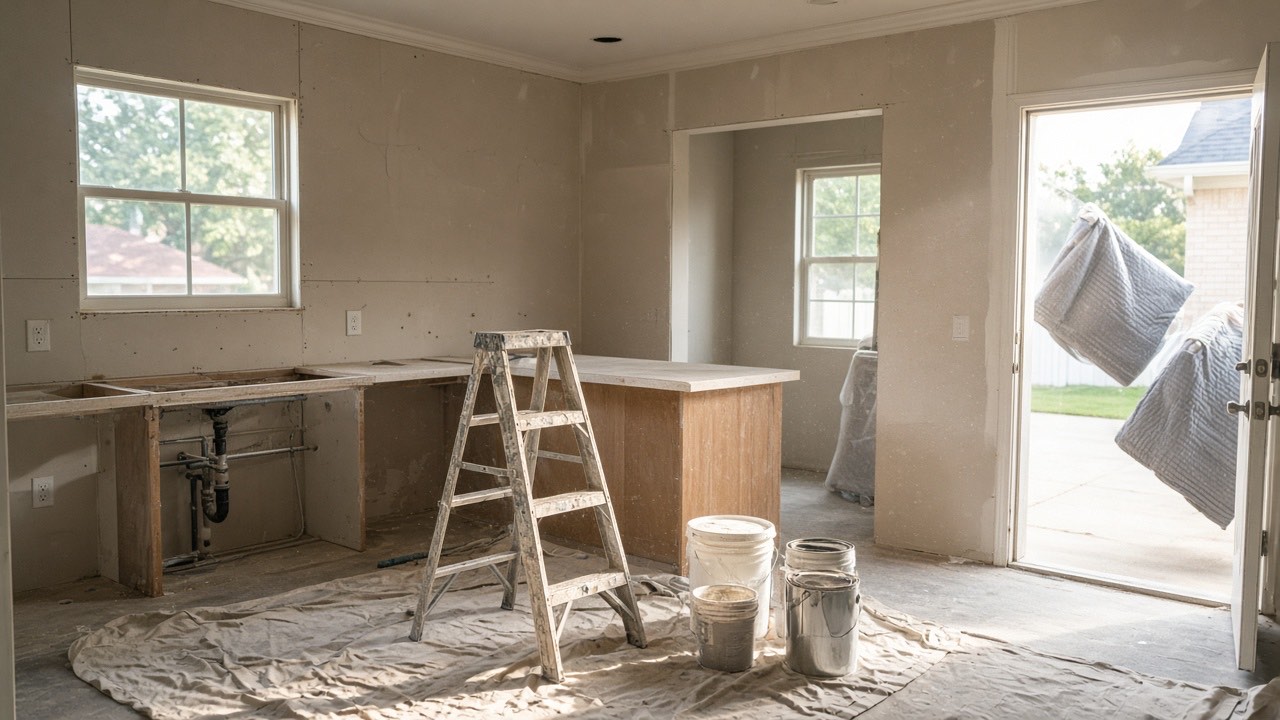
The short answer: move furniture and belongings out of the work zone, and ideally out of the house, before renovation starts. Crews work faster in empty rooms, and your things stay clear of dust, paint, and accidental damage.
Why storage pays for itself during a remodel
- Labor time: crews moving your sofa from room to room is time you're paying for.
- Dust: drywall dust travels through HVAC systems into every room.
- Damage: ladders, tools, and paint near furniture is a recipe for scratches and spills.
- Flooring jobs: new floors require completely empty rooms anyway.
What to move out
| Project | Move to storage |
|---|---|
| Kitchen remodel | Dining set, small appliances, dishes, pantry overflow |
| Flooring | All furniture in affected rooms, rugs, décor |
| Bathroom remodel | Linens, nearby bedroom furniture if access is tight |
| Whole-home or storm repair | Nearly everything not needed day to day |
How long to rent
Take your contractor's timeline and add 25–50%. Permits, inspections, and back-ordered materials are the usual culprits. Storage is the one part of the project you can extend without stress.
Storm repairs
After hurricanes and floods, Gulf Coast homes often need weeks of drying and repair. Moving salvageable furniture into a dry, secure container protects it while the house is opened up. E-Z Storage containers are built for high structural resistance and guaranteed hurricane-proof.
Planning a project? An 8×20 ft container ($85/month) fits the contents of several rooms. Get a quote or call 713-702-8451.
Frequently asked questions
Should I put furniture in storage during a renovation?
Yes, in most cases. It protects furniture from dust and damage and lets contractors work faster in empty rooms, which can lower labor costs.
How long should I rent storage for a remodel?
Use the contractor's estimated timeline plus 25 to 50 percent, since permits, inspections, and material delays often extend projects.